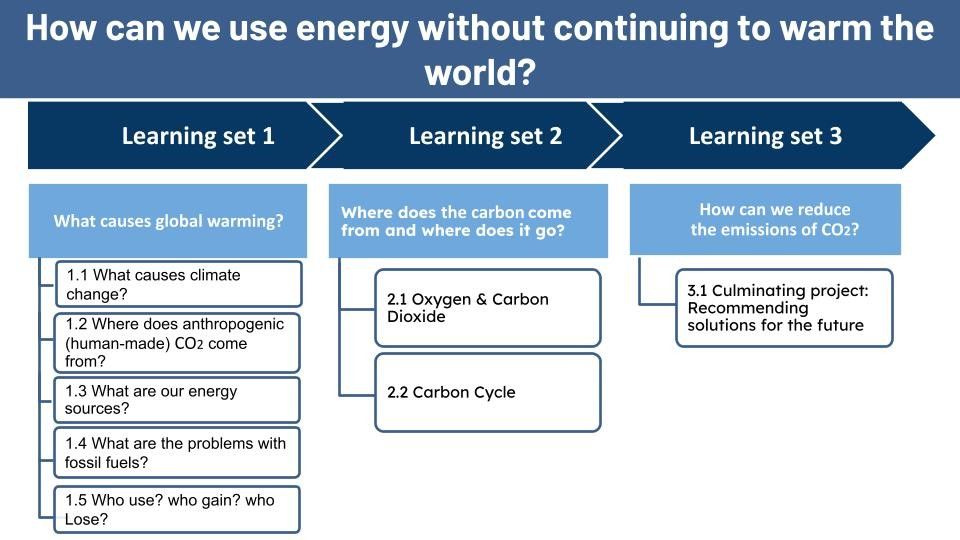
| 1.1 What causes climate change? | Introduce to the phenomenon of climate change and rise of atmosphere temperature; Correlate the phenomenon of climate change, specifically, the rise of temperature, with the increase of atmosphere CO2 | 45 minutes |
| 1.2 Where does anthropogenic (human-made) CO2 come from? | Greenhouse effect; The major sources of anthropogenic CO2 are from the burning of fossil fuels due to the use of energy. | 60 minutes |
| 1.3 What are our energy sources? | Major energy sources; The transformation of energy (from kinetic and potential energy to electricity); Fossil fuels (coal, oil, natural gas) and their importance; Transition of energy sources during the past 150 years; | 135 minutes |
| 1.4 What are the problems with fossil fuels? | Issues caused by fossil fuels includes: - Rise of atmosphere CO2
- Depletion of fossil fuels
- Pollution and acid rain
Evaluating Online Scientific Sources | 135 minutes |
| 1.5 Who use? Who gain? Who lose? | Two issues about energy use: - Energy use and climate change
- Energy poverty and climate injustice
Transition from coal. What makes it difficult? | 45 minutes |
| 2.1 Oxygen & Carbon Dioxide | Gather evidence that burning fossil fuels and cellular respiration increase the amount of CO2 in the atmosphere, while photosynthesis decreases the amount of CO2 in the atmosphere. | 50 minutes |
| 2.2 The Carbon Cycle | To tie together the previous lesson (2.1) with the learning objectives of the first learning set to give a cohesive presentation of the carbon cycle. | 50 minutes |
| Final project | | |